David Attenborough's 100 Years - A Population Timeline
Compiled by: Yan Vana
Introduction
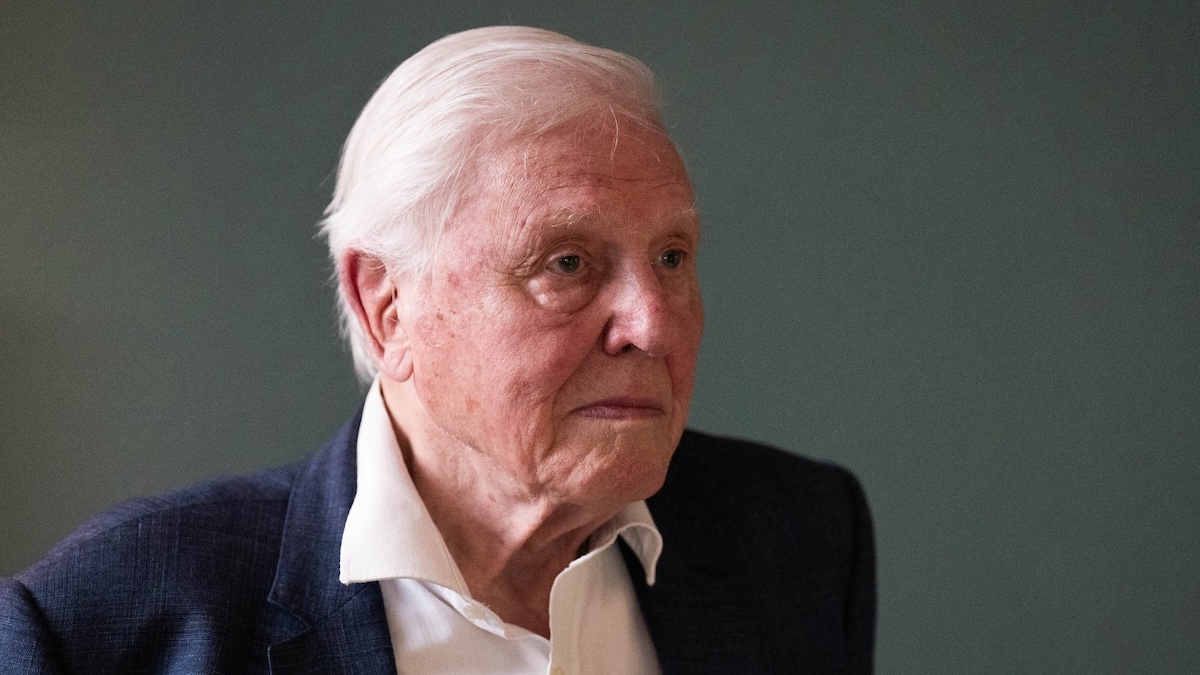
Sir David Attenborough is one of the world’s most recognisable and respected broadcasters, writers and natural historians.
With a television career spanning eight decades, Attenborough has brought the natural world into the homes of millions, revealing virtually every part of the world, its inhabitants, and its ecosystems.
But with the acceleration of climate change in recent decades, Attenborough’s books, lectures and film work have also contained frequent stark warnings about the impact humans are having on our planet.
Most notable of his concerns has been human overpopulation, which he described in his 2011 RSA President’s Lecture[1] as: “… a plague on the Earth. It’s coming home to roost over the next 50 years or so… either we limit our population growth or the natural world will do it for us”.
The human population has more than quadrupled during David Attenborough‘s 100 years on the planet and the following timeline tracks its growth through his life and career.
Timeline
1926: David Frederick Attenborough was born on 8th May in Isleworth, West London.
Population: 2.0 billion
1947: Graduates from Clare College, Cambridge, with a degree in Natural Sciences.
Population: 2.4 billion
1952: Joins the BBC as a trainee television producer. Achieves first television credit on Coelacanth, a deep sea fish previously thought to have been extinct for over 70 million years. In this short film, experts discuss the significance of its rediscovery off the Comoro Islands.
Population: 2.6 billion
1954: Begins work as writer, presenter, sound-recordist and producer for landmark series Zoo Quest[2]. The production runs for seven series, visiting locations that include Sierra Leone, Indonesia and Guyana.
Population: 2.7 billion
1960: Presents The People of Paradise[3], a series about the natural history and anthropology of the South Pacific.
Population: 3.0 billion
1963: Presents his first children’s series, Attenborough and Animals.
Population: 3.2 billion
1965: Appointed Controller of new channel BBC Two.
Population: 3.3 billion
1969: Appointed BBC Director of Programmes.
Population: 3.6 billion
1973: Resigns from full-time position with BBC to return to film-making. Travels to South-East Asia to film Eastwards with Attenborough.
Population: 3.9 billion
1979: Life on Earth, the result of four years of research and filming, is first broadcast. The series follows the entire history of life on our planet.
Population: 4.4 billion
1983: Appointed Fellow of the Royal Society[4].
Population: 4.7 billion
1984: The Living Planet first broadcast. Focusing on ecology, this was the second in Attenborough’s ‘Life’ series.
Population: 4.8 billion
1985: Awarded knighthood for services to broadcasting.
Population: 4.9 billion
1990: The Trials of Life first broadcast, examining animal behaviour.
Population: 5.3 billion
1995: The Private Life of Plants is broadcast, making use of innovative time-lapse photography techniques.
Population: 5.8 billion
2000: Investigates the science behind the environmental crisis debate in the three-part documentary series State of the Planet.
Population: 6.2 billion
2001: Narrates The Blue Planet, exploring the Earth’s oceans.
Population: 6.3 billion
2006: Narrates Planet Earth[5]. This groundbreaking series filmed in high definition was, at the time, the most expensive documentary series ever made.
Population: 6.7 billion
2008: Life in Cold Blood is broadcast, focusing on reptiles and amphibians, and concluding the ‘Life’ series.
Population: 6.8 billion
2011: Delivers his President’s Lecture at the RSA (Royal Society for the encouragement of Arts, Manufactures and Commerce)[1]. The lecture remains one of the most defining speeches on the topic of human overpopulation and its impact our planet.
Population: 7.1 billion
2014: Natural History Museum Alive, filmed behind the closed doors of London’s natural history museum, uses cutting edge CGI to bring Attenborough’s favourite extinct animals back to life.
Population: 7.4 billion
2016: Celebrates his 90th birthday with a one-off television interview Inspiring Attenborough: Sir David at 90.
Population: 7.6 billion
2018: Receives Primetime Emmy Award for Outstanding Narrator.
Population: 7.7 billion
2020: A Life On Our Planet is broadcast in which Attenborough highlights the damage done by human population growth and the actions that must be taken if Earth is to remain habitable for future generations.
Population: 7.8 billion
2021: Receives Lifetime Achievement Award from Champions of the Earth[6], an annual recognition established by the United Nations Environment Programme (UNEP) in 2005.
Population: 7.9 billion
2023: Voted UK’s Favourite TV Presenter of All Time[7].
Population: 8.1 billion
2026: David Attenborough’s 100 years to be marked by the upcoming (May 2026) Secret Garden series, in which he will be examining the incredible wildlife in Britain’s backyards.
Population: 8.3 billion
Data Sources
[2] The BBC
[3] Wikipedia
[4] The Royal Society Fellows Directory
[5] The BBC
[6] Champions of the Earth – UN Environment Programme
[7] Newspaper: The Daily Express
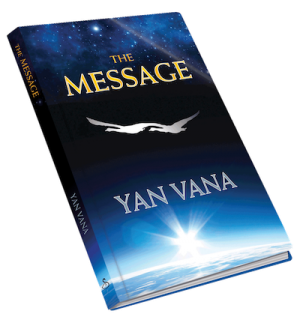
The Message is the ground-breaking debut novel by Yan Vana, a thought-provoking and critically acclaimed book that will change the way you think about human overpopulation, its effects and consequences.