
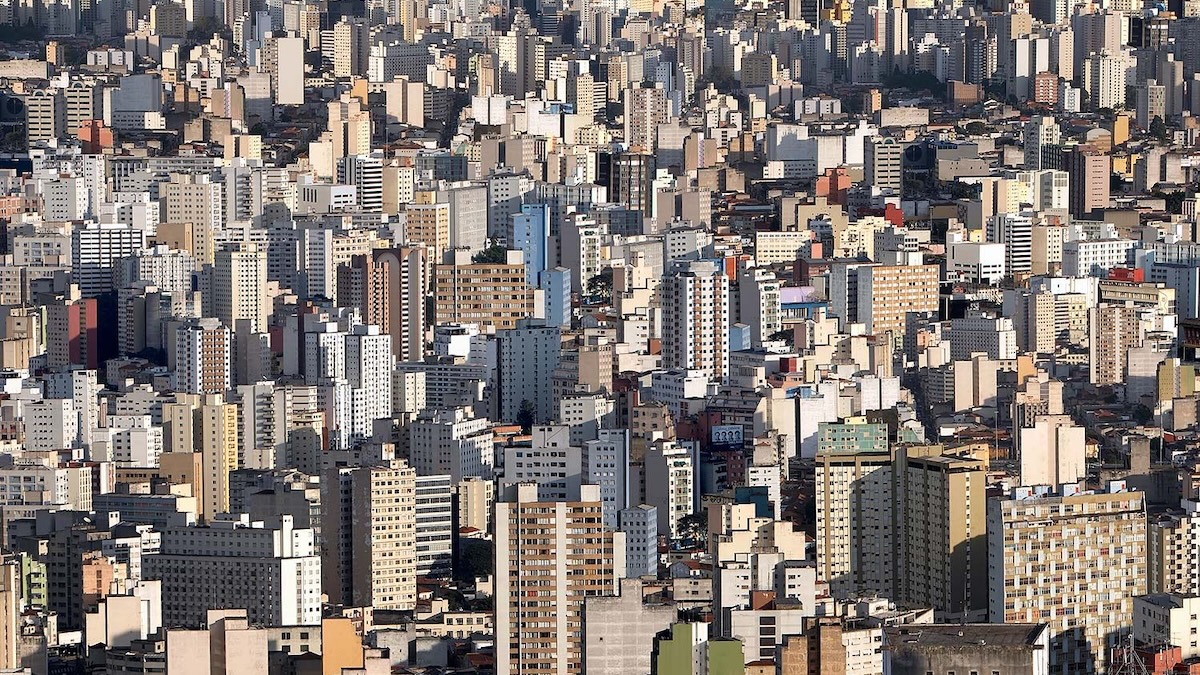
Global Urbanisation Outpacing Population Growth
Since 1975, the amount of built-up land across the planet has grown almost twice as fast as the global population, according to a new United Nations (UN) report.
The new report, World Urbanisation Prospects 2025 (WUP25), reveals a dramatic shift in how humanity now occupies the planet and raises further concerns over sustainability.
This continued expansion means the average amount of constructed space per person has risen from 44 m2 to 63 m2, highlighting significant inefficiencies in land use worldwide.

For the first time in history, more people now live in cities than in towns or rural areas. The global population has become increasingly urbanised, with 45 per cent of people now living in cities, a sharp increase from only 20 per cent in 1950. Towns currently house 36 per cent of the population, while only 19 per cent remain in rural areas.
This latest analysis is made possible by combining satellite imagery with census data using the new harmonised Degree of Urbanisation methodology. This approach classifies settlements into cities, towns, and rural areas in a consistent way across all countries, providing unprecedented detail on population growth and physical expansion.
By 2050, two-thirds of the world’s population growth will occur in cities, according to the report. This surge is projected to be highly concentrated in just seven countries: India, Nigeria, Pakistan, the Democratic Republic of Congo, Egypt, Bangladesh, and Ethiopia, which together are expected to add over 500 million new urban residents in the next two and a half decades.
Overall, the number of cities globally has already doubled since 1975 to over 12,000, including 37 megacities (cities with a population in excess of 10 million).
The rapid, uncoordinated spread of built environments, often referred to as urban sprawl, poses a significant sustainability challenge. This continued expansion encroaches on farmland and natural ecosystems, creating long-term environmental risks. Furthermore, rapid urbanisation in regions like Sub-Saharan Africa and Southeast Asia necessitates a huge growth in infrastructure in order to keep pace.
The UN report notes deep inefficiencies in land use, particularly in rural areas where built-up land per resident has doubled since 1975, despite slower population growth. Europe, North America, Australia, and New Zealand have seen land use per person rise considerably. At the same time, those in Central and Southern Asia remain the most land-efficient.
In order to address these challenges, the report emphasises the urgent need for better land management, encouraging more compact and connected developments. Strategic planning is crucial to managing rapid urban expansion effectively and efficiently, especially in regions with high population growth.
Utilising open, detailed data from sources such as the Joint Research Centre’s Global Human Settlement Layer is presented as being essential for policymakers to make evidence-based decisions and build more sustainable urban-rural systems.

Submitted by Friends of Retha
The Message is the ground-breaking debut novel by Yan Vana, a thought-provoking and critically acclaimed book that will change the way you think about the human population and the near future of earth.
“You must read this book. You think you know where the story is headed, trust me you don’t… keep reading to the end!”

“What a book! Such an eye opening perspective, utterly true… compelling and extremely accurate. Heaven help us.”




Add Comment