
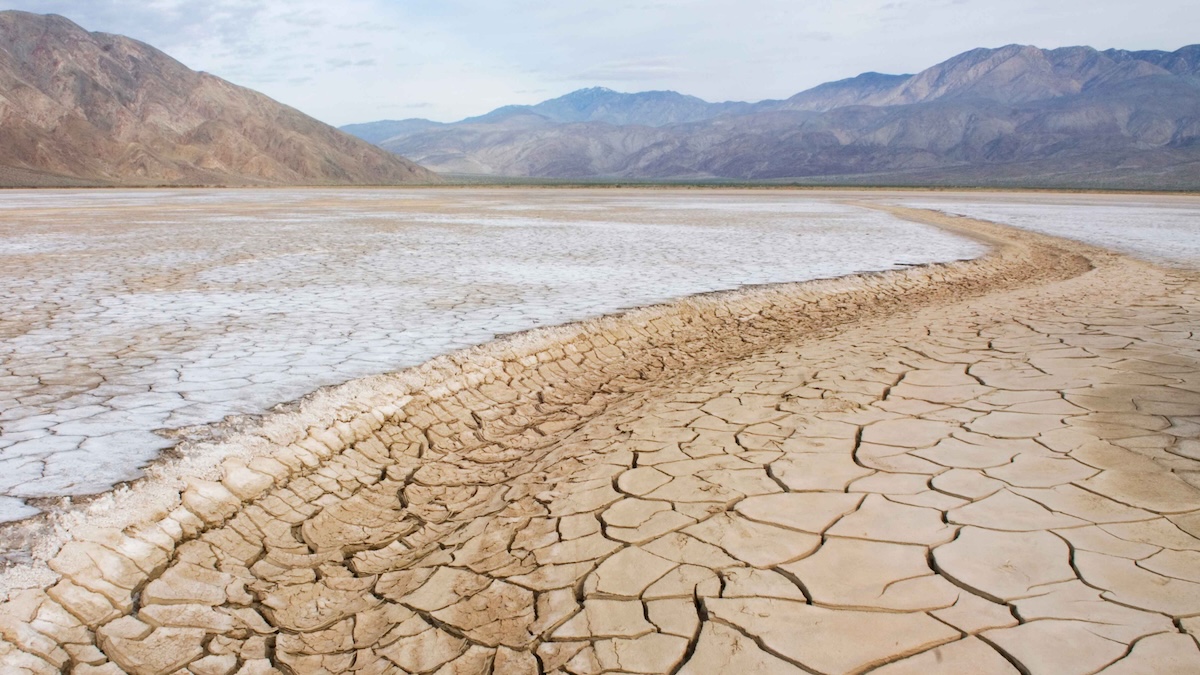
Overpopulation Pushes The World Into Water Bankruptcy
The world is now in water bankruptcy say United Nations scientists, and here’s what it means.
According to a new study by the United Nations University Institute for Water, Environment and Health (UNU-INWEH), the world is now using so much fresh water as a result of the consequences of population growth and climate change that it has entered an era of water bankruptcy, with many regions no longer able to bounce back from frequent water shortages.
Currently about 4 billion people – almost half the global population – live with severe water scarcity for at least one month a year, without access to sufficient water to meet all of their needs. And many more people are seeing the consequences of water deficit: dry reservoirs, crop failures, water rationing and more frequent wildfires and dust storms in drying regions.

Water bankruptcy indicators are everywhere, from Tehran, where droughts and unsustainable water use have depleted the reservoirs the Iranian capital relies on, to the United States, where water demand has outstripped the supply in the Colorado River, a vital source of irrigation and drinking water in seven states.
What is water bankruptcy?
Water bankruptcy is not just a metaphor for water deficit. It is a chronic condition that develops when a place or region uses more water than nature can reliably replace, and when the damage to the natural assets that store and filter that water, such as aquifers and wetlands, becomes hard to reverse.
The UNU-INWEH’s latest study concludes that the world has now gone beyond temporary water crises. Many natural water systems around the world are no longer able to return to their historical conditions and these systems are now in a state of failure – water bankruptcy.
What water bankruptcy looks like in reality
In financial bankruptcy, the first warning signs often feel temporary and manageable: borrowing money, late payments, selling things you’d hoped to keep. Then the problem begins to feel inescapable.
Water bankruptcy has similar stages.
At first, we pull a little more groundwater during dry years. We use bigger pumps and deeper wells to access more water. We transfer it from one basin to another. We drain wetlands and straighten rivers to make space for farms and cities.
Then the hidden costs begin to reveal themselves. Lakes shrink year after year. Wells need to go deeper. Rivers that once flowed all year become seasonal. Salt water creeps into aquifers near coastal regions. And the ground itself starts to sink.
Sinking, or subsidence, often surprises people, but is a clear signature of water bankruptcy. When groundwater is overpumped, the underground structure, which holds water like a sponge, can collapse. In Mexico City, land is sinking by about 25 centimetres per year. And once the pores become compacted due to the subsidence, they can’t be refilled.
The following infographic shows which regions are the most water-stressed. The darker the colour, the higher the water-stress, and the more likely that region is in or approaching water bankruptcy.
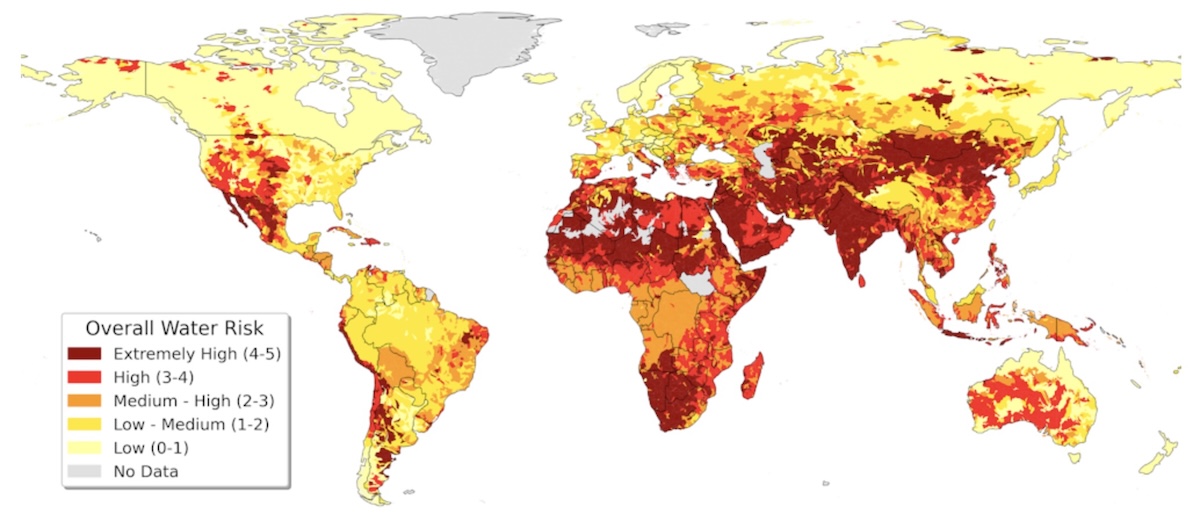
The higher the value, the greater the water-related risks. Source: United Nations University Institute for Water, Environment and Health.
Published by the UNU-INWEH last week, The Global Water Bankruptcy report documents how widespread water bankruptcy is becoming. Groundwater extraction has contributed to significant land subsidence over more than 6 million square kilometres of the Earth, including urban areas which are home to a quarter of the planet’s population.
Agriculture is the world’s biggest water user, responsible for about 70 per cent of the global freshwater withdrawals. When a region goes water bankrupt, farming becomes more difficult and more expensive, threatening economic stability and global food supply chains.
About 3 billion people and more than half of global food production are concentrated in areas where water storage is already declining or unstable. More than 1.7 million square kilometres of irrigated cropland are under high or very high water stress, threatening food security around the world.
Droughts are also increasing in duration, frequency and intensity as populations continue to grow and global temperatures rise. Over 1.8 billion people – almost 1 in 4 humans – have been exposed to drought conditions at various times since 2022.
These numbers translate into real problems for the inhabitants of affected regions: higher food prices, hydro-electricity shortages, health risks, unemployment, migration pressures, unrest and conflicts.
Yet despite these problems, nations continue to increase water withdrawals to support the expansion of cities, farmland, industries and now data centres. All to provide for an ever increasing global population.
Climate change is undoubtably exacerbating the problem, but human overpopulation is at the root cause.
Submitted by Friends of Retha
The Message is the ground-breaking debut novel by Yan Vana, a thought-provoking and critically acclaimed book that will change the way you think about the human population and the near future of earth.
“You must read this book. You think you know where the story is headed, trust me you don’t… keep reading to the end!”

“What a book! Such an eye opening perspective, utterly true… compelling and extremely accurate. Heaven help us.”




Add Comment