

Overpopulation Campaigners Are Declining - Why More Voices Are Needed
Paul R. Ehrlich’s death on 13 March 2026 marked the passing of one of history’s most passionate and persistent overpopulation campaigners.
Notably, Ehrlich’s death also reveals how few campaigners are still left to publicly voice their concerns on the dangers of human overpopulation.
Overpopulation has been both a concern and a subject of contention for almost two and a half centuries. The following are some of the more high profile advocates for overpopulation control.
Thomas Malthus: 13 Feb 1766 – 29 Dec 1834
Thomas Malthus was born in England in 1766 at a time when the earth’s population was around 800 million, less than a tenth of the population today.
Although educated primarily in the arts, in 1798 Malthus published what became his most well-known work, An Essay on the Principal of Population.
The Essay was considered a radical publication at the time and argued that increases in human population would eventually diminish the ability of the world to feed itself. His conclusion was based on the thesis that populations expand in such a way as to overtake the development of sufficient land to produce crops to sustain human life.
Thomas Malthus argued that: “… infinite human hopes for social happiness must be vain”, and that “The increase of population will take place, if unchecked, in a geometric progression, while the means of subsistence will increase in only an arithmetic progression. Population will always expand to the limit of subsistence”.
He believed that unless people exercised restraint in the number of children they produced, the resultant spiralling population would face an inevitable shortfall of food, forcing mankind into a ceaseless struggle for existence.
The Malthusian Theory, sometimes referred to as the Malthusian Growth Model, is still a powerful topic of debate today, and one that frequently feels more relevant than ever.

Margaret Sanger: 14 Sept 1879 – 6 Sept 1966
Margaret Sanger was an American birth control activist, sex educator, writer, and nurse. Regarded as the founder of the U.S. birth control movement, she was also influenced by Malthusian concerns about the detrimental effects of overpopulation.
Sanger conceived the term ‘birth control’ and in the early 1950s persuaded philanthropists to provide funding for biologist Gregory Pincus to develop the first birth control pill.
She frequently used the word “feebleminded” to refer to Americans who could not be trusted to manage their families themselves and described unwanted pregnancies as the “threat of reckless procreation”.
Margaret Sanger’s fears of overpopulation weren’t confined just to America. A prolific traveler, she journeyed throughout Asia and Europe, and was adamant that one of the primary causes of World War I was the pressure Germany was under to seize more territory for a growing population.
William Vogt: 15 May 1902 – 11 July 1968
Willian Vogt was an ecologist with a particular passion for ornithology. His most recognised accomplishment was to make the world more aware of the imbalance in the relationship between a rapidly growing human population and its food supply.
In 1942 Vogt travelled to Chile, where he conducted a series of climatological studies which, even then, made him aware of the full extent of the depletion of natural resources and the consequences for the human population. His studies led him to became increasing concerned about the relationship between the natural environment and both human and bird populations.
In 1948, his popularity rose when he published Road To Survival, in which he examined in detail the imbalance between human population growth and food supplies.
In his book, William Vogt wrote that “… it is imperative that this world-wide dilemma be made known to all mankind. The human race is caught in a situation as concrete as a pair of shoes two sizes too small. We must understand that, and stop blaming economic systems, the weather, bad luck, or callous saints”.
Vogt argued that affluence is not mankind’s greatest achievement but its biggest problem and that if we continued to take more than the Earth can give, “… the unavoidable result will be devastation on a global scale”.
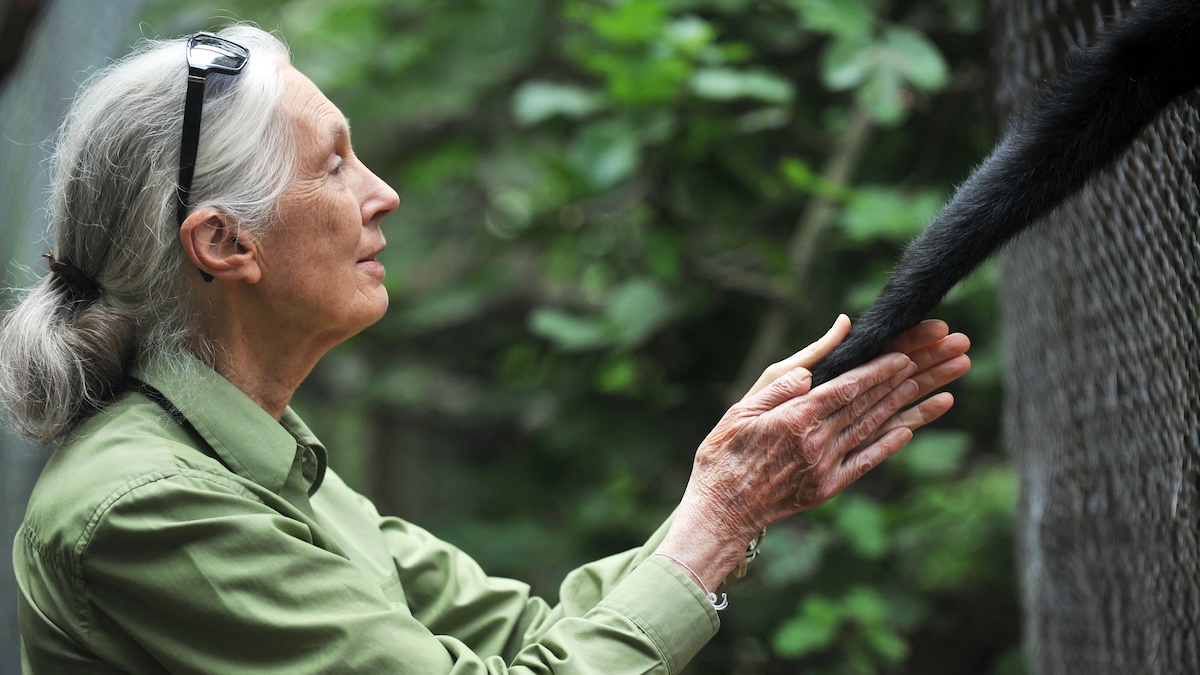
Jane Goodall: 3 April 1934 – 1 oct 2025
Jane Goodall was an English primatologist and anthropologist, and regarded as one of the world’s preeminent chimpanzee experts.
Goodall had a fundamental understanding of the delicate balance between an expanding human population and the natural world, issuing frequent warnings of the dangers that overpopulation presented to the planet’s future.
In a message to the 2019 Population Matters conference, she stated: “I would encourage every single conservation organisation, every single government organisation to consider the absurdity of unlimited economic development on a planet of finite natural resources. We can’t go on like this. We can’t push human population growth under the carpet”.
And speaking at the World Economic Forum in Davos in January 2020, Jane Goodall said: “We need to stop land being used for cattle and growing grain for the billions of animals we keep in our intensive farms… we cannot hide away from human population growth; because, you know, it underlies so many of the other problems – all these things we talk about wouldn’t be a problem if there was the size of population that there was 500 years ago. It’s our population growth that underlies just about every single one of the problems that we’ve inflicted on the planet. If there were just a few of us, then the nasty things we do wouldn’t really matter and Mother Nature would take care of it – but there are so many of us”.
Paul R. Ehrlich: 29 May 1932 – 13 March 2026
Paul R. Ehrlich was an American biologist, environmentalist, and author of the controversial book The Population Bomb.
A Stanford University professor, Ehrlich was best known for his predictions and warnings about the consequences of human population growth. His core neo-Malthusian message was simple; that overpopulation posed a grave risk to mankind and that millions would die from hunger as food supplies globally became increasingly scarce.
In The population Bomb, published in 1968, Ehrlich, along with his wife Anne, predicted worldwide famines due to human overpopulation, as well as other major societal upheavals, insisting that urgent action was required to limit population growth.
Ehrlich claimed: “Saying ‘it’s only consumption, it’s not the number of people that counts’ is like saying ‘the area of a rectangle is determined only by it’s width, not by it’s length’. Certainly, consumption is a big problem. So is population size. The two multiply together to give you your impact on your life support systems”.
As was the case with Thomas Malthus, Paul R. Ehrlich’s predictions only proved wrong at the time because he underestimated how quickly technology would advance and how those advances would be employed in food agriculture, livestock breeding and the extraction of ever more natural resources from the planet.
Sir David Attenborough: 8 May 1926 – present
Approaching his 100th Birthday, Sir David Attenborough has spent most of his life documenting the evolution of our planet’s environments, habitats, ecosystems and wildlife, sharing his experiences through compulsive interviews and breath-taking television shows.
During his lifetime, the planet’s human population has more than quadrupled, a growth rate that he believes threatens our very existence on Earth.
Attenborough has frequently stated that he believes our planet is unable to cope with too many more people: “It is very alarming, the rate at which we’re going. And although people will say that in the long run, we are going to stabilise, we are going to stabilise – as far as I can see – at a rather higher level than the Earth can really accommodate”.
In a 2013 interview for radio times, David Attenborough insisted: “It’s coming home to roost over the next 50 years or so. It’s not just climate change; it’s sheer space, places to grow food for this enormous horde. Either we limit our population growth, or the natural world will do it for us, and the natural world is doing it for us right now”.
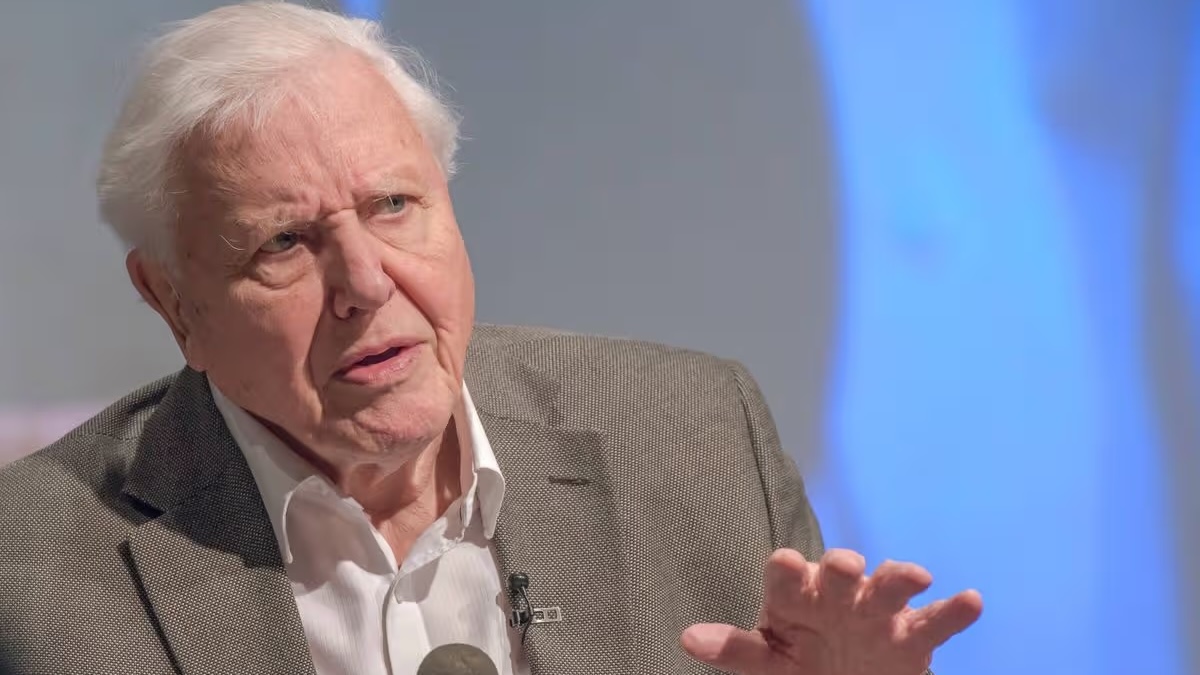
Yan Vana: DOB unknown – present
Yan Vana is a novelist and passionate overpopulation campaigner.
Yana’s observations, gathered over six decades on Earth, inspired him to write his first (and possibly only) novel The Message in 2015.
The Message has been described as “ground-breaking”, a thought-provoking and critically acclaimed debut that will change the way readers think about overpopulation and the near future of our planet. The author’s objective was to raise awareness of the issue of human overpopulation by taking an unwelcome message and making it more palatable through engaging storytelling.
The Message is: “A superb read which describes exactly what is happening on this planet today”.
Yan Vana continues to campaign on overpopulation awareness, hoping that through his own Thoughts and observations he can encourage others to make it a mainstream topic of conversation.
The future…
With Paul R. Ehrlich’s recent passing and Sir David Attenborough approaching his centenary, high profile overpopulation campaigners are becoming few in number.
With the United Nations predicting a global population of 11.2 billion by the end of the century, all the indicators suggest that the effects of overpopulation will only intensify.
More voices are needed and it is hoped that, in a world of noise and distraction, those voices will be loud enough to bring the dangers of overpopulation to the attention of the world.
Submitted by Friends of Retha
The Message is the ground-breaking debut novel by Yan Vana, a thought-provoking and critically acclaimed book that will change the way you think about the human population and the near future of earth.
“You must read this book. You think you know where the story is headed, trust me you don’t… keep reading to the end!”

“What a book! Such an eye opening perspective, utterly true… compelling and extremely accurate. Heaven help us.”




Add Comment